The Best Orton-Gillingham & Structured Literacy Reading Programs for Dyslexia: A Complete Guide
There are many excellent reading programs for dyslexia, and most of the strongest options share the same roots: explicit, systematic, cumulative instruction inspired by the Orton-Gillingham approach.
Some programs are classic OG interventions. Others fall under the broader structured literacy umbrella. This guide gives a friendly tour of the names families, tutors, and schools are most likely to encounter.
Why Orton-Gillingham Still Matters
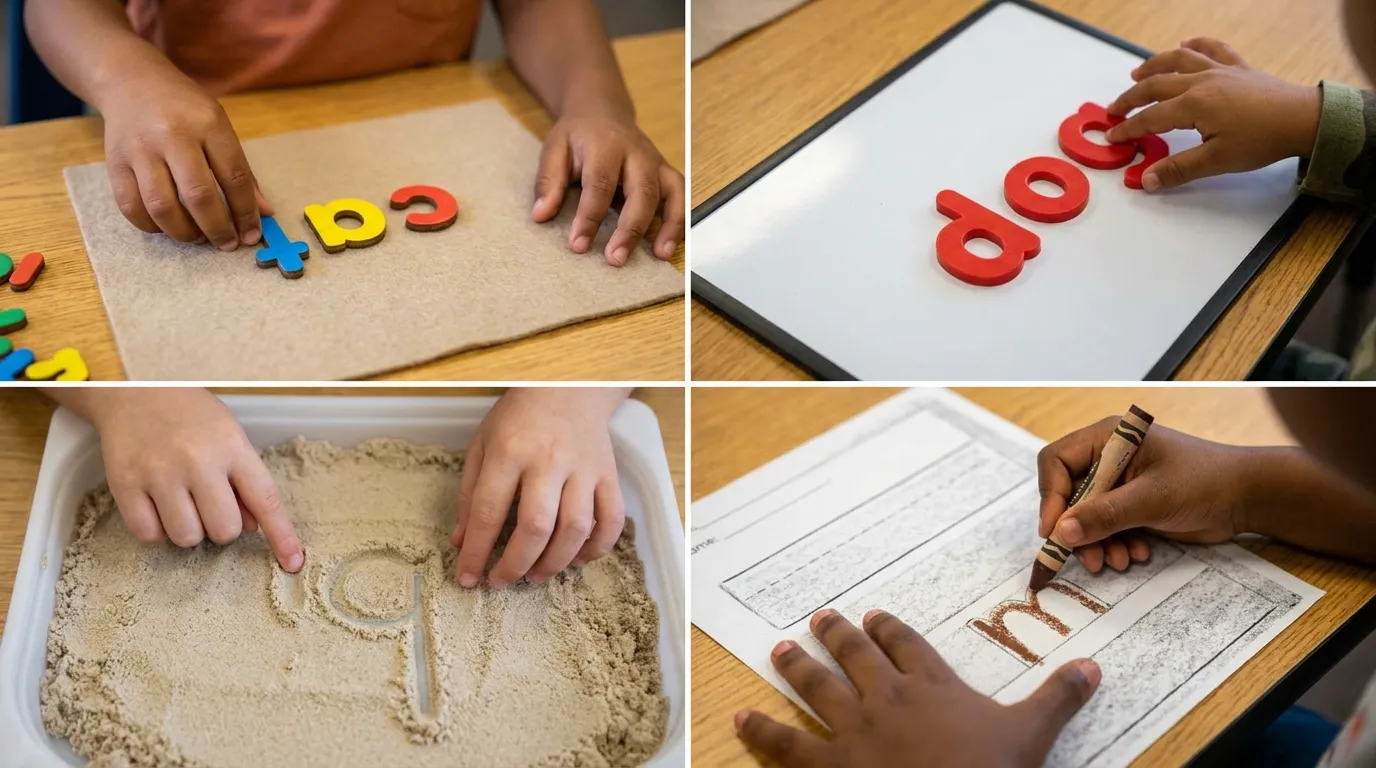
The Orton-Gillingham tradition grew from the work of Dr. Samuel Orton and Anna Gillingham in the early twentieth century. Its central idea is still powerful: reading should be taught directly, sequentially, and through multiple pathways so students can connect sounds, letters, spelling patterns, and meaning.
For dyslexic learners, this matters because guessing from pictures, memorizing word shapes, or waiting for reading to "click" often leaves gaps. Structured literacy gives the learner the code step by step, then asks them to practice that code in words, spelling, sentences, writing, and connected text.
That is why so many different programs can look different on the surface but still feel familiar once you see the lesson structure underneath: review, explicit teaching, multisensory practice, word reading, spelling, controlled text, and careful progress monitoring.
Classic / Strongly Orton-Gillingham-Based Programs
Wilson Reading System (WRS)
One of the most established names in the field. Wilson is built for intensive, structured intervention and is used heavily as a Tier 3 program for students with dyslexia and other language-based learning differences. It follows a systematic 12-step sequence with a consistent multi-part lesson structure. Because it's designed to be taught with fidelity, instructors typically complete a rigorous certification, which makes it a common choice in school districts and dedicated dyslexia programs.
Barton Reading & Spelling System
Developed by Susan Barton, this is a highly scripted, user-friendly OG program that's especially popular for one-on-one tutoring and homeschooling. Its step-by-step lessons mean a parent or tutor without a formal teaching background can deliver instruction with confidence. Barton is frequently recommended for older students and adults who still have gaps in decoding and spelling.
IMSE (Institute for Multi-Sensory Education)
Known primarily for its Orton-Gillingham teacher training, IMSE pairs professional development with classroom-ready curriculum. It's widely adopted at the district level, where the goal is to build OG capacity across many teachers rather than relying on a single specialist.
S.P.I.R.E.
A complete, packaged OG-based intervention that bundles everything a teacher needs: lessons, decodable readers, manipulatives, and assessments. SPIRE is designed to be approachable for both new and experienced teachers and is popular for small-group intervention in elementary and middle schools.
Take Flight
Developed by the Luke Waites Center for Dyslexia & Learning Disorders at Texas Scottish Rite Hospital, Take Flight is a comprehensive OG curriculum often used in clinical settings and school dyslexia programs. It draws on decades of research and is typically delivered by trained therapists or specialists.
Alphabetic Phonics
An early, influential OG derivative developed at Scottish Rite. Several modern programs, including Take Flight, trace their lineage back to it, making it an important part of the OG family tree even though you'll see its descendants more often in classrooms today.
Recipe for Reading
A long-standing, structured OG-based program organized as a clear sequence of lessons that move from initial consonants through digraphs, diphthongs, spelling generalizations, and syllable patterns. Its flexible format lets teachers use it as a core phonics program or as supplemental support, which makes it a versatile classroom tool.
Sonday System (Imagine Sonday System / Winsor Learning)
Created by veteran OG educator Arlene Sonday, this program was specifically designed to make OG easy to implement in real classrooms with minimal prep. Its open-and-go lesson plans and short training requirement, often just a day to get started, have made it a practical choice for K-12 schools and small-group intervention.
Project Read
An OG-influenced, classroom-oriented program that emphasizes direct, systematic instruction. It's built for whole-class and small-group use, making it a fit for schools that want structured literacy delivered across a grade level rather than only in pull-out settings.
Slingerland Approach
Developed by Beth Slingerland, who studied directly with Anna Gillingham, this approach adapts the OG method specifically for classroom (rather than one-on-one) instruction. It's a longtime favorite in schools that want a multisensory approach they can deliver to a full group.
PRIDE Reading Program
A newer, fully scripted OG curriculum designed to be accessible to parents and teachers without specialized training. Its detailed, open-and-go lessons have made it popular with homeschoolers as well as some school districts and tutoring centers.
All About Reading / All About Spelling
OG-influenced programs from All About Learning Press that are especially popular for home use. They're scripted, multisensory, and hands-on, with manipulatives and clear teacher guidance that make them approachable for families.
Related Programs: Phonemic Awareness & Structured Literacy
These are frequently mentioned alongside OG programs and share the same science-of-reading foundation, even when they aren't classic Orton-Gillingham.
Lindamood Phoneme Sequencing (LiPS)
From Lindamood-Bell, LiPS focuses intensively on phonemic awareness, teaching students to feel and identify the mouth movements behind each speech sound. Rather than licensing outside providers, Lindamood-Bell runs its own network of learning centers, so families often encounter it through those centers or trained clinicians.
UFLI Foundations
Developed by the University of Florida Literacy Institute, UFLI is a structured-literacy, science-of-reading-aligned program that has gained huge popularity for core K-2 instruction (and flexible intervention). It's affordable and relatively easy to implement, which has driven rapid adoption in general-education classrooms.
SIPPS, Sounds-Write, Really Great Reading, Fundations / Just Words, Logic of English, and Reading Horizons
This cluster of structured-literacy and explicit-phonics programs comes up constantly in the same conversations as OG. They're used in different ways: some teach the whole class together, like Fundations, some work best with small groups of students who need extra help, like SIPPS, and some offer flexible support for sounding out words, like Reading Horizons. All of them teach reading in a clear, step-by-step way, and many schools use a combination depending on a student's grade and how much support they need.
A Few Helpful Next Reads
Barton vs. Wilson
A closer look at two of the most discussed dyslexia intervention programs.
Barton vs. All About Reading
Why the relationship between reading and spelling matters.
Why Decodable Books Matter
How controlled text helps students apply newly taught phonics skills.
Orton-Gillingham at Home
A step-by-step guide to using the approach in a homeschool setting.
A modern transition
Where Reading Mountain fits in
Families and educators familiar with the programs listed above may recognize the structure inside Reading Mountain: explicit teaching, cumulative progression, careful decoding practice, and a strong link between reading and spelling.
Reading Mountain brings those familiar structured-literacy ideas into a modern app setting, where students practice reading, spelling, writing, and decodable books in one connected sequence.
It is not meant to erase the rich history of Orton-Gillingham programs. It is meant to make those principles easier to access for families and educators who want a structured path with app-based practice and AI-supported listening.